
Do Lab-Grown Diamonds Lose Value Over Time? A Complete Guide for Modern Buyers
Do Lab-Grown Diamonds Lose Value Over Time? A Complete Guide for Modern Buyers
Lab-grown diamonds have become a modern favorite. They sparkle like natural diamonds, cost less, and carry an ethical story. But a common question arises: Do lab-grown diamonds lose value over time? If you’re buying an engagement ring or valuable jewelry, you should know its long-term value.
Natural diamonds are seen as rare and lasting symbols of love. They are often sold as investments that keep their value. Lab-grown diamonds, though chemically identical, operate under a different market reality. Their appeal lies in affordability, sustainability, and design flexibility rather than financial retention.
This guide explains the resale value of lab-grown diamonds. It compares lab-grown diamonds to natural stones. It shows recent market trends and gives tips for smart buyers.

What Exactly Are Lab-Grown Diamonds?
Lab-grown diamonds are real diamonds. They are not simulants like cubic zirconia or moissanite. They have the same chemical structure, sparkle, and hardness as mined diamonds. Their hardness is 10 on the Mohs scale.
They are created in controlled lab environments using two main methods:
- HPHT (High Pressure, High Temperature): Replicates natural geological conditions.
- CVD (Chemical Vapor Deposition): Grows the diamond layer by layer from carbon vapor.
Labels like 'lab-grown' or 'eco-friendly' still mean real diamonds. The only difference is how they are made. The only difference is origin.
Why buyers love them:
- 💎 Cost: Typically 30–50% less than mined diamonds (Rapaport Diamond Report, 2024).
- 🌿 Sustainability: No mining, reducing environmental impact (Forbes Sustainability Report, 2023).
- 💍 Customization: Easier to choose bigger stones or higher-quality cuts within budget.
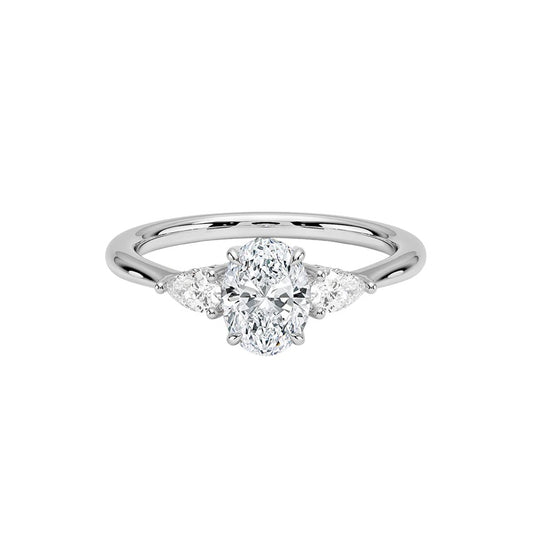
Example: Our Emerald-Cut Three-Stone Lab-Grown Wedding Ring in 14K white gold is timeless. It is also eco-friendly.
However, when it comes to resale value, lab-grown diamonds differ from natural diamonds.
Do Lab-Grown Diamonds Lose Value Over Time?
Short answer: Yes. Lab-grown diamonds usually lose much of their retail value soon after purchase. Natural diamonds may keep 50–60% of their value. Lab-grown diamonds usually sell for only 10–30% of their original price. (Source: Paul Zimnisky Diamond Market Report, 2024).
Why resale value is lower:
- Unlimited supply: Labs can produce diamonds in large quantities, reducing rarity (Zimnisky, 2024).
- Market perception: Consumers often see mined diamonds as “investment-grade.” Lab-grown diamonds are usually viewed as more consumer-friendly..
- Young secondary market: Fewer buyers participate in resale, keeping demand low.
Example: A 1-carat lab-grown diamond bought for $1,200 may resell for $500–$700. The price depends on the brand. It also depends on the certification (Brilliant Earth Resale Study, 2023).
Note: Most buyers purchase jewelry for personal enjoyment, meaning value isn’t only monetary. Engagement rings and anniversary gifts carry emotional significance that can outweigh resale concerns.
Lab-Grown vs. Natural Diamonds: Value Comparison
| Feature | Natural Diamonds | Lab-Grown Diamonds |
|---|---|---|
| Initial Cost | Significantly higher. A 1-carat natural diamond can cost between $4,000 and $10,000+ | Significantly lower. A comparable 1-carat lab-grown diamond might cost $1,000 to $3,000 |
| Rarity | Considered rare, as supply is finite and controlled by mining operations | Not rare. Supply is theoretically unlimited and production is increasing |
| Resale Value | Retain approximately 50–60% of their original retail value in the secondary market | Resale value is currently low, often 10–30% of the original price. This is expected to decrease further |
| Investment Potential | Generally considered a poor financial investment for consumers, but holds value better than lab-grown diamonds | Not considered a financial investment. Its value is primarily emotional and aesthetic |
| Primary Appeal | Tradition, rarity, perceived store of value, and long-term history | Affordability, ethical sourcing (eco-friendly diamonds), and the ability to get a larger stone for the budget |
(Data: Rapaport Price Index, Jan 2024; Zimnisky Global Lab-Diamond Report Q3 2023)
Perspective: A 2-carat lab-grown diamond may cost the same as a 1-carat natural diamond. While resale is lower, upfront savings allow a bigger or higher-quality stone.
Recent Trends in the Secondary Market
The resale market for lab-grown diamonds is still evolving. Over the last two years:
- Market share: Lab-grown diamonds account for 18–20% of global diamond sales (Forbes, 2024).
- Resale participation: Less than 10% of these diamonds enter the secondary market.
- Resale offers: Most resell between 40–60% of the purchase price (IDEX Online, 2023).
Observation: Platforms like WP Diamonds and The RealReal note limited buyer interest.
Example: A 1-carat lab-grown diamond ring bought for $1,100 in 2023 may resell for about $650. The final price depends on the cut and grading (Zimnisky, 2024).
Image Placeholder: Graph: Retail vs. Resale Prices – 1 ct. Lab-Grown and Natural Diamonds (2023–2025)
Insight: The lab-grown diamond resale market may stabilize. However, prices will likely stay low. This is similar to other lab-made gems, like sapphire or emerald.
Why Lab-Grown Diamonds Still Cost Over $1,000
Despite lower resale value, lab-grown diamonds still retail for high prices. Factors include:
1. Advanced Manufacturing
HPHT and CVD methods require precision equipment, energy, and skilled labor (Journal of Gemmology, 2023).
2. Certification & Finishing
Grading from IGI or GIA guarantees authenticity. Polishing and setting diamonds in jewelry adds cost.
3. Jewelry Design & Craftsmanship
A ring’s price reflects the entire package: stone, design, metalwork, and finishing.
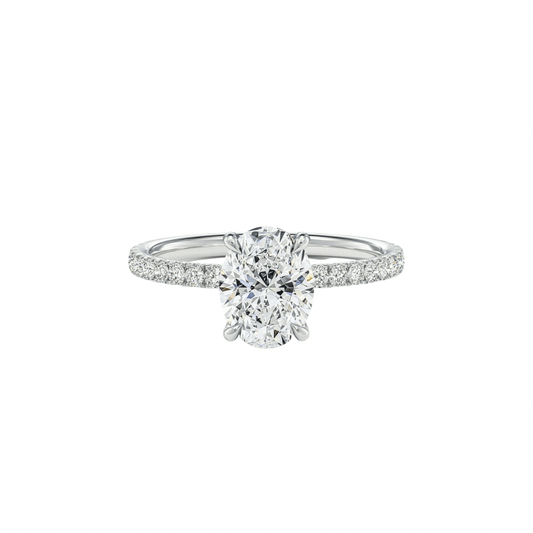
Example: This 1.0 ct Hidden Halo Oval Diamond Ring is made with lab-grown diamonds and 14K white gold. It's a beautiful, eco-friendly piece.
4. Brand, Story & Trust
Buyers pay for brand reputation and ethical sourcing. According to the De Beers Insight Report 2024, sustainability is a top priority for 72% of U.S. millennials when buying fine jewelry.
Bottom line: You’re paying for experience, ethics, and style, not just resale.
Tips for Buying Lab-Grown Diamonds
If you want to maximize value (for enjoyment or potential resale):
- ✅ Choose certified retailers: IGI/GIA documentation and warranties matter.
- ✅ Keep paperwork safe: Certificates, receipts, and original packaging.
- ✅ Timeless designs sell better: Solitaire, halo, or three-stone rings.
- ✅ Focus on cut and clarity: A well-cut 1 ct. sparkles more than a poor 2 ct.
- ✅ Resale expectations: Prepare to recover only 40–60% at best.
Explore Our Lab-Grown Diamond Bands.
The True Meaning of Value
Resale isn’t everything. Lab-grown diamonds provide:
- Beauty
- Ethical sourcing
- Craftsmanship
- Cost savings
When you buy something you love, its emotional value matters more than the price. The best diamond is one you wear and cherish, not just one you hope to sell.